


Do Workplace Ergonomics Really Matter?
For Mental Health Awareness Week, we want to do our part in supporting workplaces in creating an ergonomic environment. With the average person spending one-third of their life at work, it is important to ensure they feel supported and comfortable within the workplace. Not only can this help their current well-being, but it can also protect them from both physical and mental illnesses in the future.
What is the goal of workplace ergonomics? 🤔
Workplace ergonomics is the process of creating a working environment that suits the people using the space on a frequent basis. Reducing discomfort at work can help to optimise efficiency and productivity, and prevent the risk of long term-illnesses and diseases from developing.
From adding ergonomic office chairs that prioritise neck and back support, to handling equipment to prevent strain from lifting, we offer a range of solutions for all workplaces. From the traditional office environment to warehouse floors, ergonomic solutions can be implemented everywhere.
The cost of poor ergonomics ⚠️
When workplaces do not consider ergonomic factors, this can lead to a variety of short and long-term issues for employees.

- Increased risk of strains from poor posture whilst sitting at desks
- Long-term illnesses, including musculoskeletal disorders (MSDs)
- Poor mental health, including anxiety and depression, due to physical discomfort or little focus on improving employee wellbeing
- Reduced productivity at work due to feeling fatigued or poor working layouts
Over time, these issues can affect not only individual well-being but also cost a business money. Organisations can experience a decrease in output but lose time as employees call in sick to work. As a result, whilst investing in ergonomic solutions may be pricy to begin with, it can help avoid costly compensation claims.
Ergonomics in the office 💻
When working within an office, a large proportion of the day is spent sitting at a desk. This can lead to poor blood circulation and posture, which can affect employees in later life, both mentally and physically. Musculoskeletal disorders are common among those later in life who work in office environments with little focus on ergonomics, as well as an increased risk of stress and anxiety.
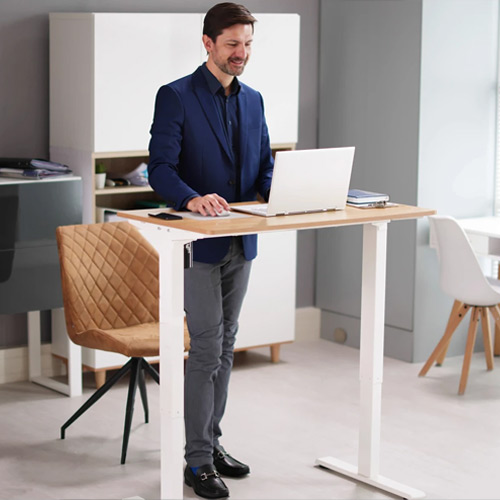
To avoid blood circulation issues, many workplaces have begun to add height-adjustable desks to their office environment. Their adjustable height helps workers maintain the correct seating position and avoid hunching during the day. Additionally, you can raise them for use as a standing desk for brief periods, which helps stop back strain.
Monitors should sit at eye level or just below to support better posture. IF not, there is an increased risk of neck strain, which can lead to further pain issues. Adding adjustable monitor arms is a great way of ensuring monitor heights can be altered for each employee. Plus, this level of flexibility makes employees feel supported, leading to a boost in worker morale.
Sometimes, jobs at work require an employee to sit down so they can complete more precise levels of work, such as CAD drawing. To improve posture in these scenarios, we offer a variety of ergonomic office chairs with lumbar back support. The Gemini Mesh Back Office Chair meets both EN 1335-1:20000 and EN 1335-2:2018 standards. This allows 8 hours of comfortable sitting with lumbar support and an ergonomic waterfall seat.
Ergonomics in the construction industry 🏭
Providing an ergonomic workplace stretches beyond the office. It is also a large factor within the construction industry. With strenuous working conditions, implementing a variety of ergonomic solutions can improve safety, minimise physical strain, and prevent additional stress.
Ergonomic workbenches
Durable workbenches are a great choice for creating a stable working spot. Our heavy-duty Cantilever Workbenches are perfect for creating an accessible workspace, with a variety of worktops, above-bench and below-bench accessories to increase usability.
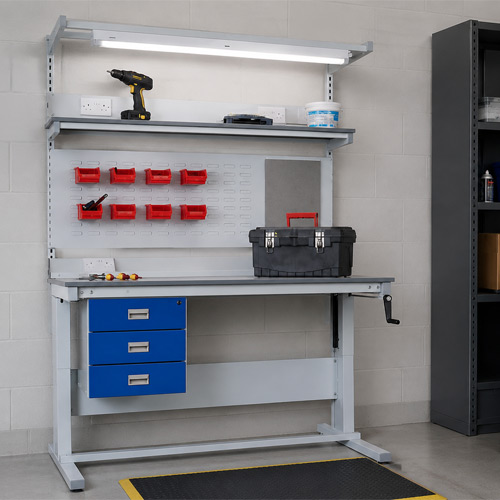
We also offer a selection of height-adjustable workbenches, allowing for improved user flexibility. Whether sitting or standing, users can fully adjust these tables for an ergonomic working position.
For additional ergonomic support, why not consider adding ergonomic anti-fatigue matting to your setup? They are perfect for those workers who will stand up during the working day, as textured surfaces can encourage increased blood flow, minimising tiredness and physical stress.
The importance of adding warehouse equipment
Adding the correct style of warehouse steps can also help to boost ergonomics within large distribution centres. Our best-selling TUFF Express Easy Glide Steps are manufactured with gritted anti-slip steps, minimising the potential of workers falling from height. Additionally, retractable castor wheels on each step make moving them around large working environments easy and less strenuous.
We always recommend implementing heavy-duty lifting equipment, such as lift tables or dollies, for moving heavy and bulky items. This can prevent potential straining and pulling of back muscles, leading to a variety of injuries. However, training can also be completed with employees to showcase ergonomic lifting techniques that will reduce the risk of physical strain:
- Stand in front of the object with a wide foot stance, shoulder width apart
- Bend at the knee, not with your back. Keep your back straight the entire time
- Lift with two hands and use your legs
- Keep the object close to your waist, preventing spinal strain
- When turning, hold the item; turn with your feet, not your upper body
Small changes for a big difference ✨
Improving workplace ergonomics can be achieved in multiple ways. Whilst purchasing new office furniture is a great choice for long-term improvement, even investing in targeted upgrades can also help to improve ergonomics straight away.
Simple changes include investing in new office chairs, which can be quickly implemented in a workplace without disrupting workflow. The Eclipse Ergo Meshback Armchair is a great option for this, with adjustable armrests, headrests and lumbar support, perfect for stopping straining during long working hours. Plus, employees will feel more comfortable and supported throughout the day, which can help reduce stress, improve focus, and contribute to better overall mental well-being in the workplace.
For those organisations wanting to keep to budgets, adding these ergonomic enhancements even in smaller increments can begin to improve employee performance, organisation and efficiency. Alternatively, you can request a quote from us at Direct2U, and we will help in providing recommendations based on your workplace requirements and budget.