


A guide to the Food Waste Regulations 2026, starting on 31st March 🍅
As part of the Government’s ‘Simpler Recycling‘ legislation, all houses in the UK will need to separate their food waste from their general waste. Created by the Department for Environment, Food and Rural Affairs, the aim is to improve our carbon footprint.
How does it work? 🤔
Whether you live in a house or a flat, it will be a legal requirement to follow these food waste regulations. From March 31st, local councils will be dropping off a 5-7 litre indoor kitchen caddy, as well as a 23 litre outdoor caddy. Each council’s start dates for food collection may differ. To find your exact start date, enter your postcode into the Government’s Find Your Rubbish Collection Day page.
- Position your indoor kitchen caddy in an accessible spot. This includes next to your current bin, or on top of a worktop.
- Line this smaller bin with a compostable bag or newspaper to prevent the bin from getting messy as scraps are added.
- Once your indoor caddy is full, or at the end of the day, tie the top of the bag and move it into the larger outdoor caddy.
- Put your outdoor caddy out on the kerb for weekly collection alongside your general waste or recycling bins. Bin men will then take this food waste away as part of their collection service.
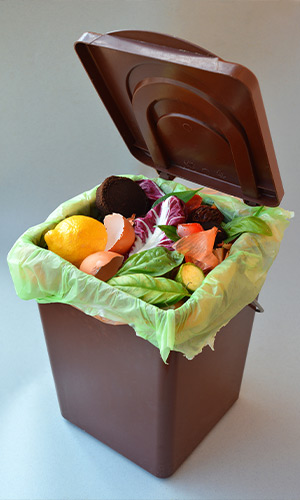
It is important to note that each of these caddys feature a sealable lid, preventing the smells of food from getting out. Additionally, it prevents pests and pets from being attracted to the waste disposal bin. As a result, your kitchen can remain clean and tidy, whilst you also support a sustainable movement.
Some councils will provide the bin liners free of charge, with a tag within each roll to flag down binmen to leave additional bags. Some councils have decided against this and households will need to buy their own compostable bags once they have run out. To check your eligibility, explore the Waste and Recycling section of your local council’s webpage.
So, what food waste can I add to these bins? 🍗
Separating as much food as possible into this food waste bin is fundamental. Because most foods contain 70% or more water, traditional incinerators for general waste struggle to burn them. We have compiled an extensive list of the do’s and don’ts of food waste.
Throw into the Food Waste Bin
🍝 All leftover food left on your plate
🍌 Excess peelings, cores and pits from fruit and veg
🥖 Mouldy food, from bread to vegetables
🍗 Bones, skin and fat from meat and fish
🥚 Eggshells
🍵 Used tea bags and coffee grounds
🐱 Pet food
Do not throw into the Food Waste Bin
🫗 Liquids including milk, drinks and cooking water
📦 Packaging from the food waste, including plastic
🍳 Large amounts of oil and fat
🧻 Pet waste
The sustainable benefits of following the Food Waste Regulations ♻️
In England alone, 30% of rubbish thrown into the general waste is food. Therefore, disposing of this waste separately can help to achieve net-zero targets set out by the Government. Wales has been separating food waste for over a decade, and has helped them become a recognised country based on their reduced waste.
If food cannot be burned, it is sent to a landfill instead. This means it gets buried among other amounts of waste. When rotting food has no access to oxygen, it produces methane. This greenhouse gas emission is 28 times more potent than carbon dioxide. This makes it a dangerous gas impacting the environment.
It has been noted that by separating food waste from general waste, households can get a clear visual of how much food they are wasting. This can alter mindsets and encourage more mindful food shopping habits. As a result, you can also save money on the weekly food shop.
What happens to the food waste? 🚛
After collection, workers transport this food to anaerobic digestion (AD) plants across the country. These facilities break down food into usable assets.
Food processing creates biogas as a natural resource source. It can heat homes and provide vital electricity. A single caddy of food waste can power a home for almost a year, making it energy efficient. This is why the National Grid utilises this power source, as it minimises fossil fuel usage.
The remaining product is ‘digestate’, and local farms use it as bio-fertiliser on crops. With its nutrient-rich properties, it is a great alternative to synthetic fertiliser. Additionally, it can improve the quality of the soil too, and boost moisture retention.
How we can help at Direct2U? 💛
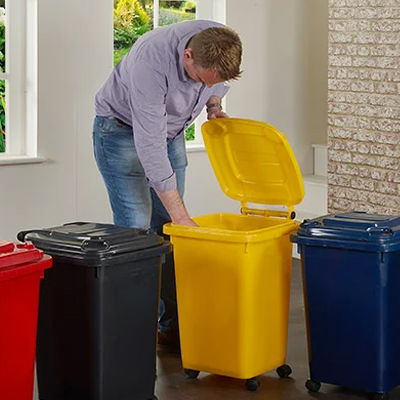
At Diect2U, we want to help everyone to get to grip with the new regulations. For households that may benefit from a larger caddy, we offer TUFF 50L Wheelie Bins in a variety of colours. Movable on 4 swivel castors, it is easy to move, and conforms to council regulations. We recommend checking with your local council whether this alternative bin can be used for outdoor collection.
This bin comes with 2-3 working day delivery as standard. However, if you want this quicker, next working day delivery is also available as an additional upgrade! Just remember to purchase before 3pm, and receive the very next working day.
Prepared for 31st March 2026? 📆
We are proud to support sustainable movements, including these brand new food waste regulations. That is why our wheelie bins come in multiple sizes, perfect for upgrading your bin space for larger households. We also offer a range of indoor bins, including segregated recycle bins, ideal for workplaces looking to improve their sustainable habits.
For questions regarding our wide range of recycling bins, contact our sales team. They can offer support and guidance when placing your wheelie bin order.